SERVICO2
greenhouse gases, headwater catchments, CO2, methane, N2O, low-cost sensors, climate change, Water4All, European, UPC, Jordi Fonollosa, bioengineering

| Full title | Impacts of global change on the regulation of greenhouse gases in headwaters |
| Status | Active · started 2025 |
| Duration | 3 years |
| Call | Water4All 2023 Joint Transnational Call |
| Coordinator | CEAB-CSIC, Blanes, Spain |
| B2SLab PI | Jordi Fonollosa |
| Website | servico2.org |



The scientific challenge
Small streams matter more than their size suggests. Headwater catchments — the upper reaches of river networks that collect water draining from soils, forests, and wetlands — play a disproportionately large role in the global carbon cycle. They act as conduits and reactors: groundwater and soil water enriched with dissolved CO₂, methane (CH₄), and nitrous oxide (N₂O) enter these streams and are released to the atmosphere, making headwaters significant, and still poorly quantified, sources of greenhouse gases.
Three global change drivers are reshaping how headwaters perform this function:
- Climate change — altered temperature and precipitation regimes change microbial activity, water residence times, and organic matter decomposition in soils and sediments.
- Atmospheric nutrient deposition — nitrogen (N) and phosphorus (P) deposited from the atmosphere fertilise catchment soils, altering the biogeochemical processes that produce and consume greenhouse gases.
- Land use — forest management, agriculture, and urbanisation change the hydrological and biogeochemical character of the landscape the stream drains.

Despite their importance, headwater greenhouse gas fluxes remain poorly represented in global and regional carbon budgets. Measurement is technically demanding — small streams are spatially heterogeneous, temporally variable, and logistically difficult to instrument at the resolution needed to capture short-term dynamics. SERVICO2 addresses this directly, combining long-term observational data from established monitoring networks with new low-cost sensor technology to bridge the gap between rare intensive measurements and the high-frequency, multi-site coverage that regional carbon accounting requires.
Objectives
B2SLab’s contribution: sensor technology
The UPC team, led by Jordi Fonollosa, is responsible for the design, development, and deployment of the multi-sensor monitoring nodes that form the measurement backbone of SERVICO2 across all field sites.
This role draws directly on B2SLab’s decade-long expertise in gas sensor arrays, signal processing, and low-cost environmental instrumentation — the same line of work that has produced CO₂ sensor placement guidelines for schools, wearable air quality monitors for asthma patients, and gas-sensor-based home monitoring for elderly individuals.
Kick-off meeting — Blanes, November 2025
The consortium held its kick-off meeting on 20–21 November 2025 in Blanes, hosted by the coordinating partner CEAB-CSIC. The UPC team presented the first prototype sensor node to the consortium — the first tangible hardware output of the project.
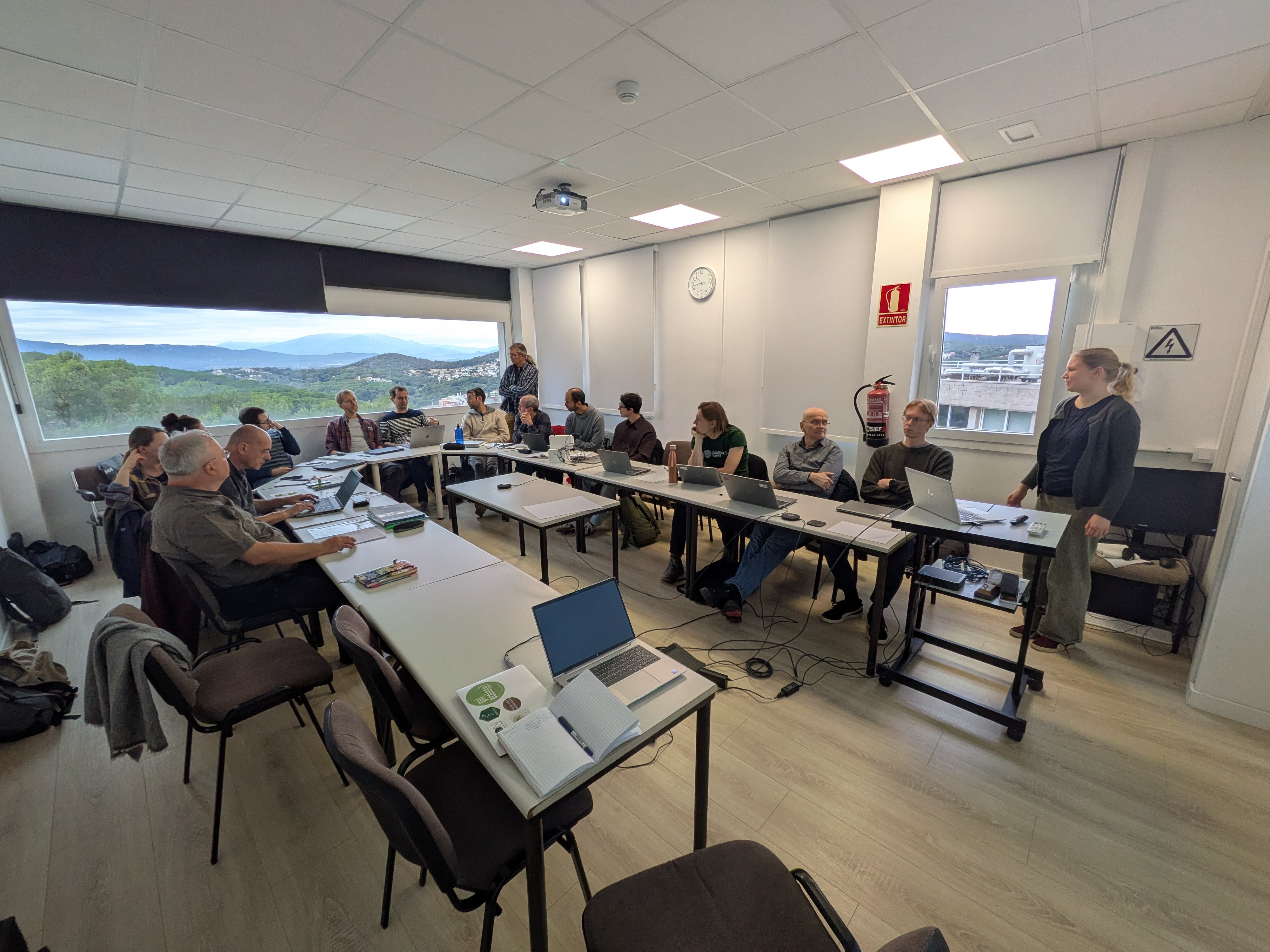
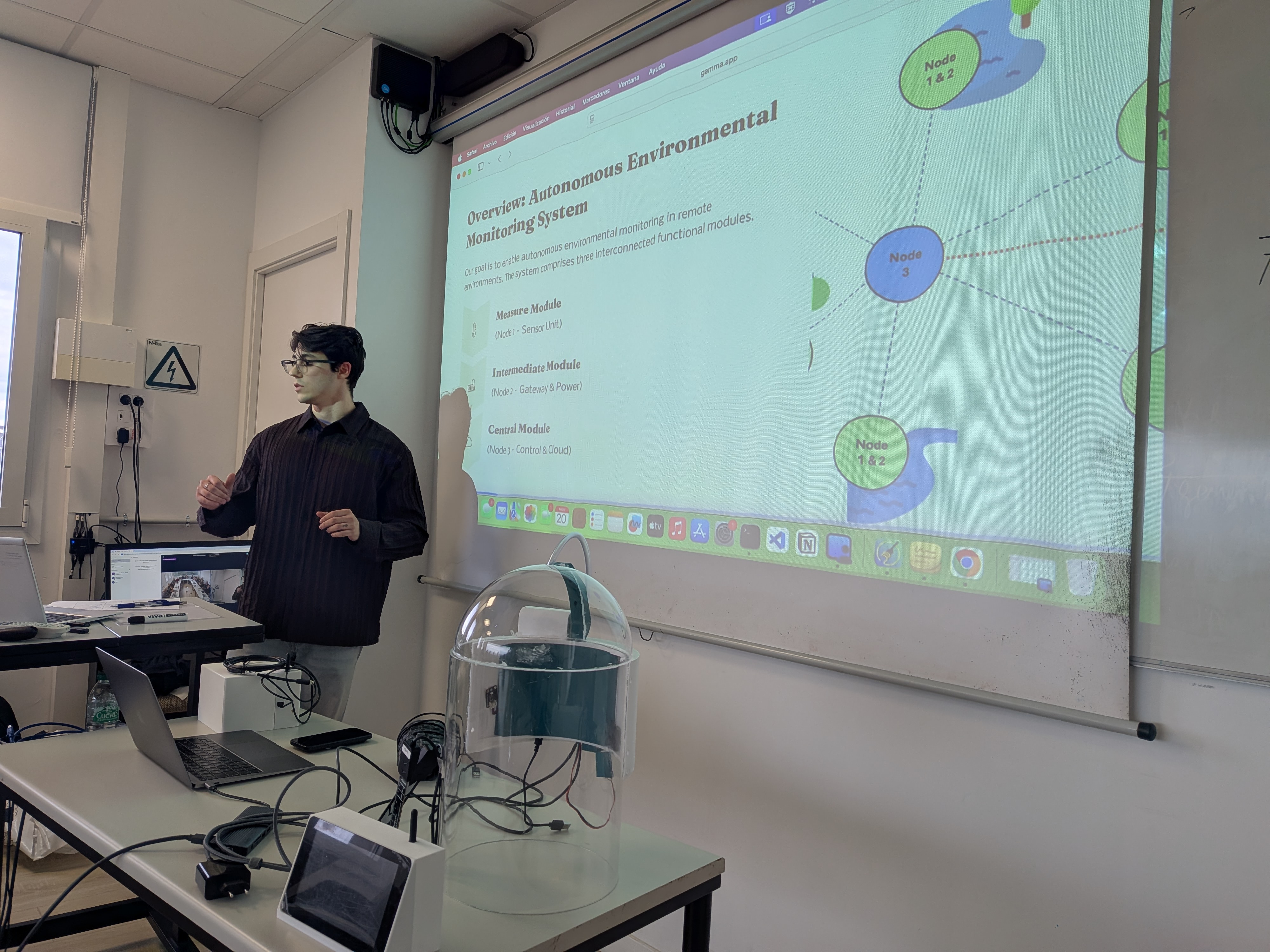
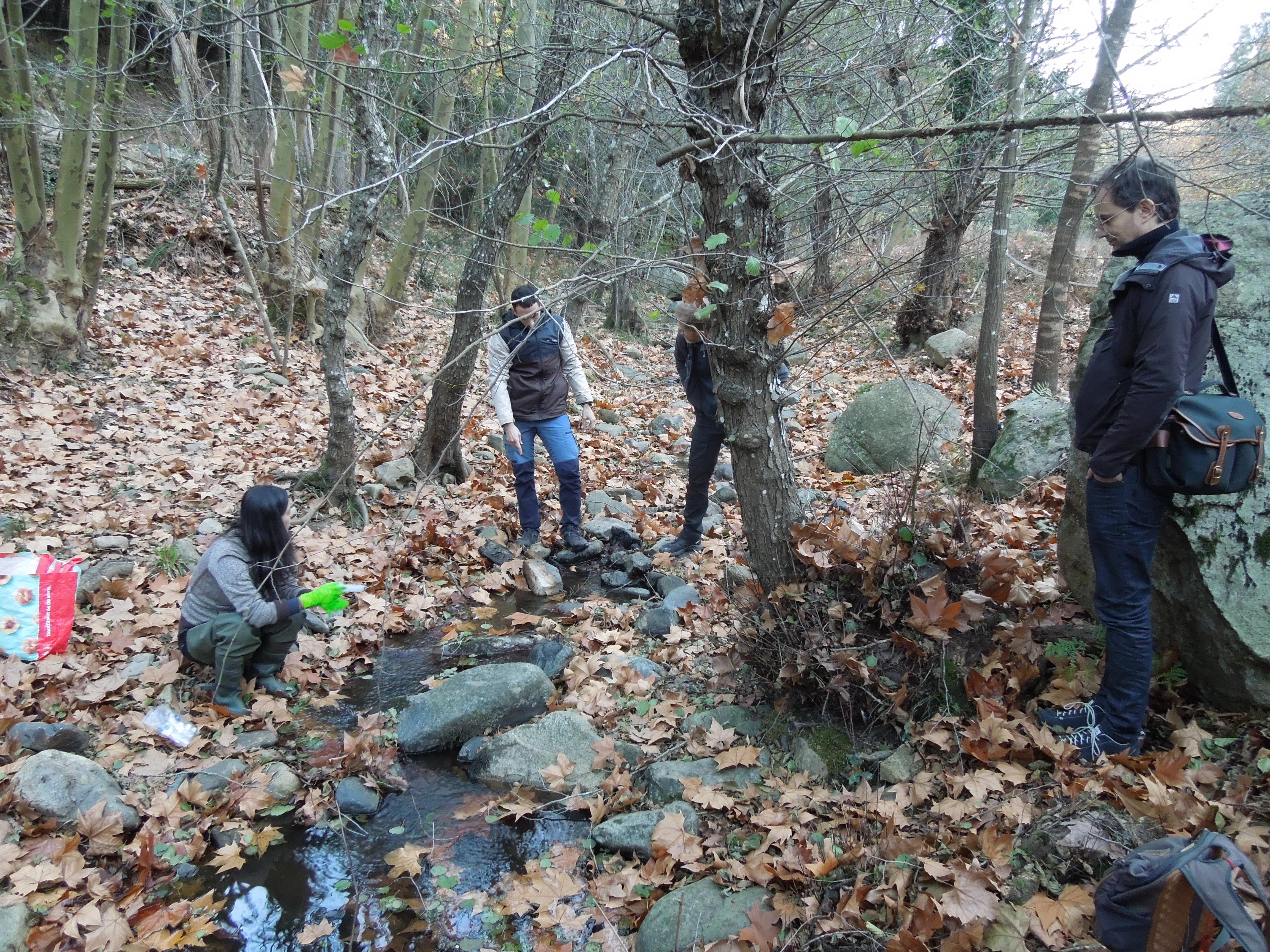
The second day of the kick-off included a field visit to gain direct insight into the logistical, environmental, and operational constraints of the deployment sites — terrain, access routes, hydrology, and weather exposure — informing the final hardware design and deployment planning.
First field deployment — Furiosos catchment, March 2026
In March 2026, the UPC team completed the first field deployment of the sensor node in the Furiosos catchment in Catalunya — the Spanish study site for the project. This marks the transition from prototype to operational field infrastructure.
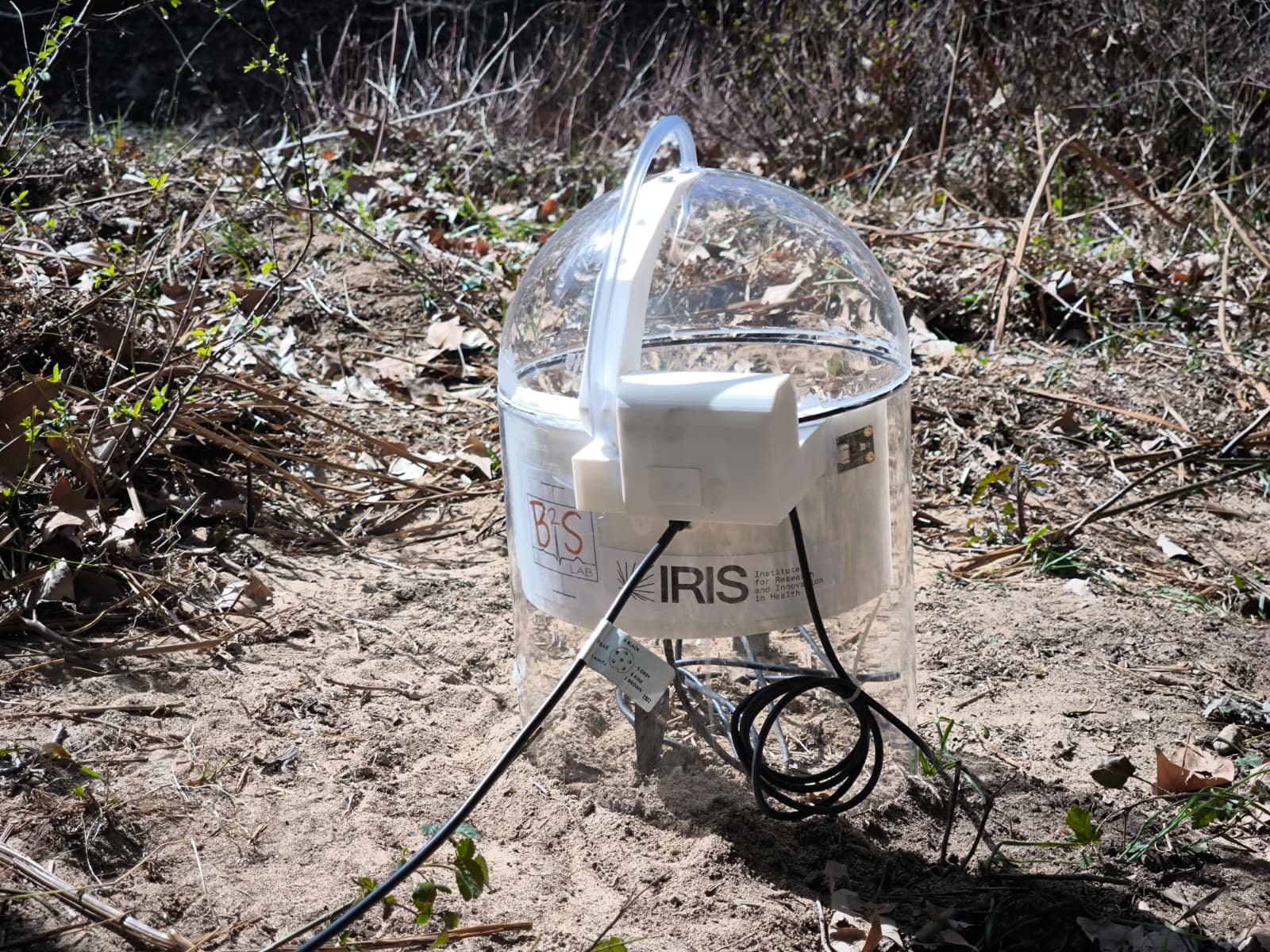
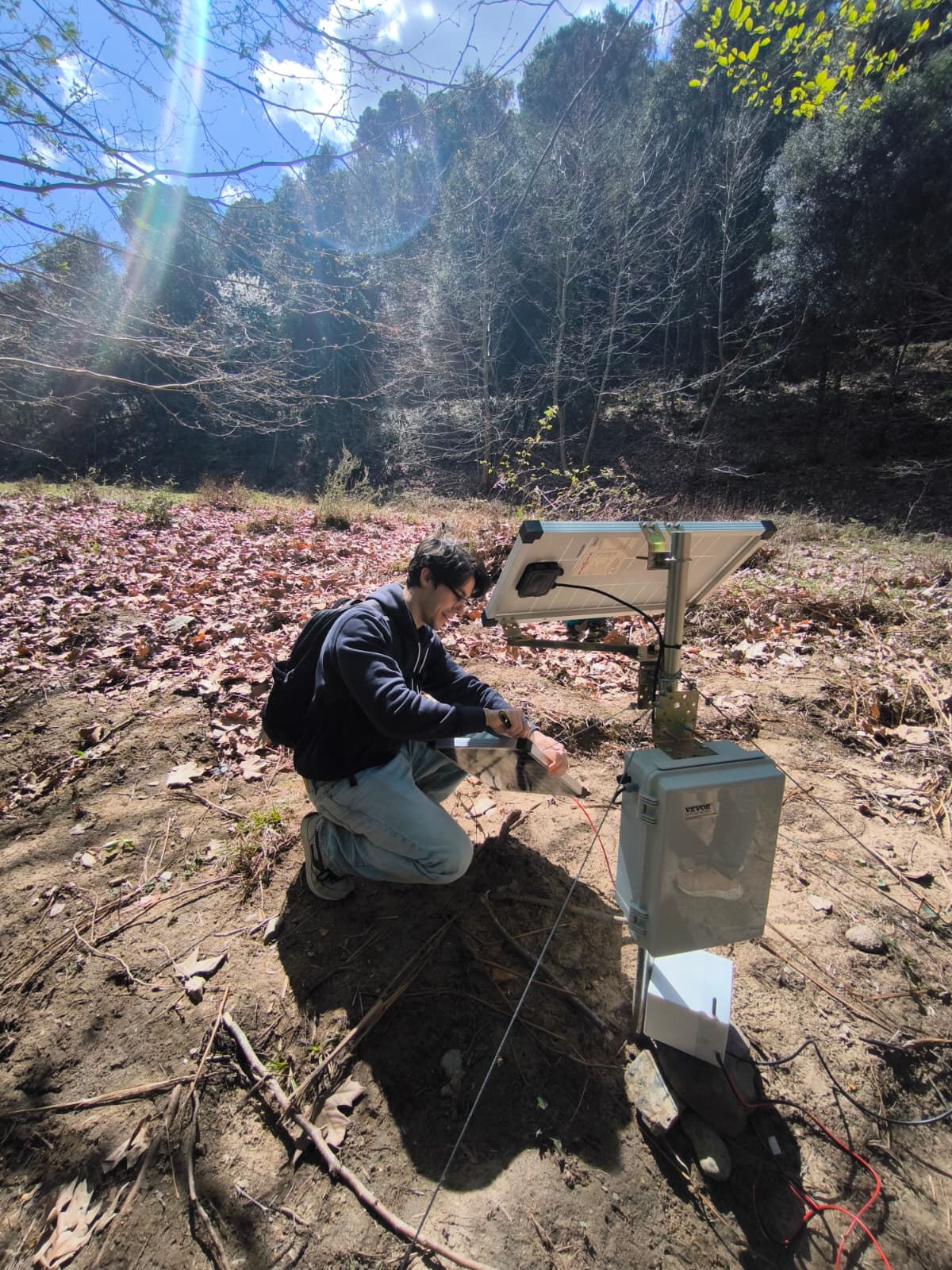
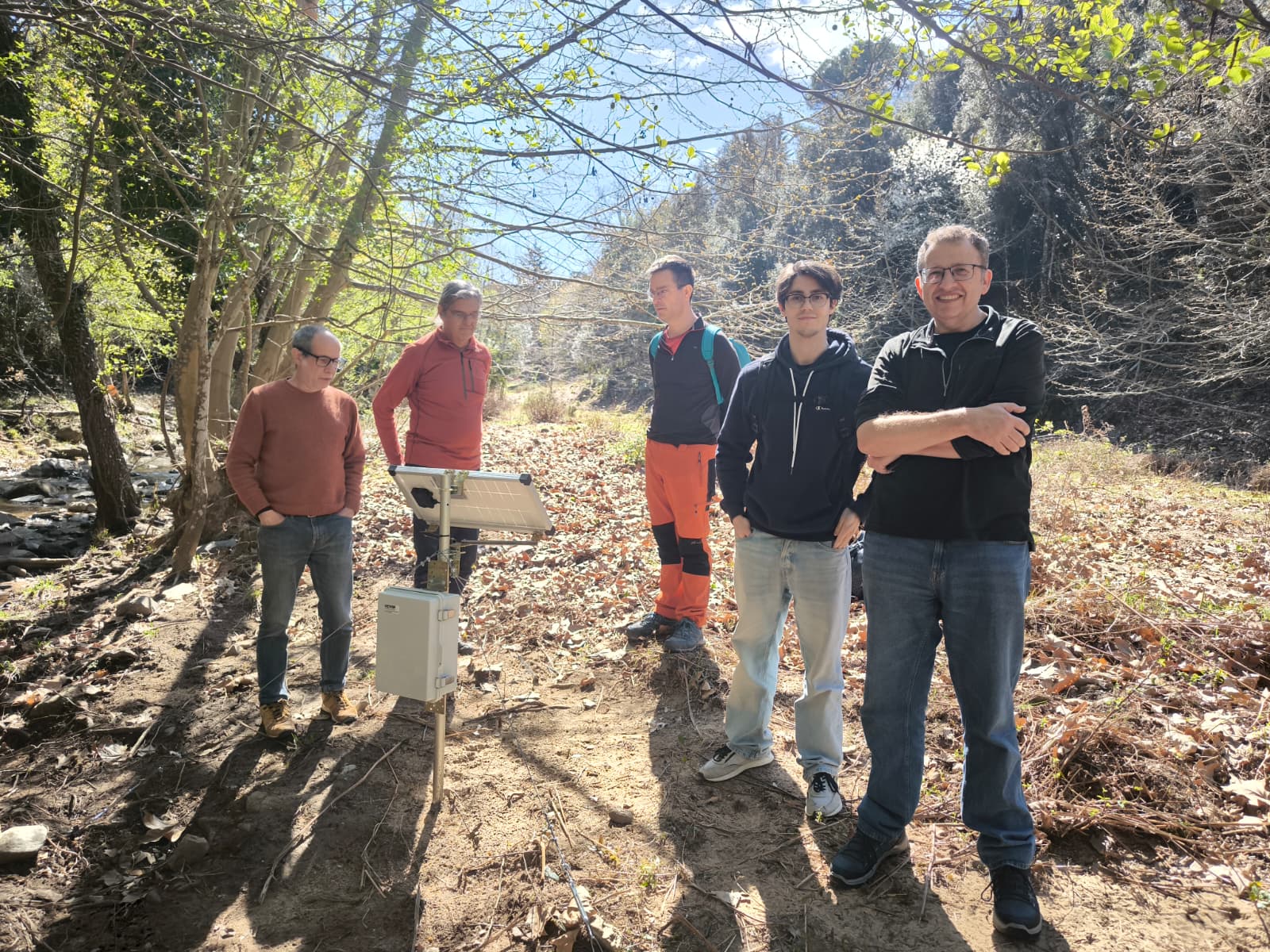
Continuous, high-resolution measurements are now underway. Data from this deployment will feed into the broader consortium analysis and help calibrate the network-wide measurement framework ahead of deployments at all partner sites.
Study sites across Europe
SERVICO2 operates across a latitudinal gradient of European headwater catchments, spanning contrasting climate zones and long-term monitoring histories:
| Site | Country | Partner | Ecosystem type |
|---|---|---|---|
| Furiosos catchment | Spain | UPC / CEAB-CSIC | Mediterranean forest |
| Lysina catchment (GEOMON) | Czech Republic | CGS | Temperate spruce forest |
| Study catchments | Italy | UniPd | Temperate mountain rivers |
| Northern Sweden sites | Sweden | Umeå University | Boreal/subarctic |
| Värriö catchment | Finland | UEF | Boreal/subarctic |
Many of these sites are embedded in long-term monitoring networks (LTER-Europe, ICP Waters, ILTER, GEOMON), providing decades of hydrological and biogeochemical reference data against which new high-frequency sensor measurements can be interpreted.
Consortium






| Partner | Country | PI | Key expertise |
|---|---|---|---|
| CEAB-CSIC (coordinator) | Spain | Lluís Camarero | Continental water and catchment biogeochemistry; carbon cycle; LTER-Spain |
| UPC / B2SLab | Spain | Jordi Fonollosa | Gas sensor arrays; signal processing; low-cost environmental monitoring |
| University of Eastern Finland (UEF) | Finland | Jukka Pumpanen | Greenhouse gas flux measurements; BVOC fluxes; ecosystem service valuation |
| Umeå University (CIRC) | Sweden | Jan Karlsson | Climate change impacts on high-latitude aquatic biogeochemistry |
| University of Padova (UniPd) | Italy | Gianluca Botter | CO₂ river-to-atmosphere flux; water cycle modelling; river metabolism |
| Czech Geological Survey (CGS) | Czech Republic | Pavel Krám | GEOMON network; 34+ years biogeochemical budgets at Lysina catchment |
Funding
SERVICO2 is funded through the Water4All 2023 Joint Transnational Call — a coordinated European funding mechanism under the EU Water4All Partnership — with co-funding from national research agencies in each partner country:
| Country | Agency |
|---|---|
| Spain | Agencia Estatal de Investigación (AEI) |
| Finland | Research Council of Finland (RCF) |
| Sweden | Swedish Research Council for Sustainable Development (Formas) |
| Italy | Italian Ministry of University and Research (MUR) |
| Czech Republic | Czech Technology Agency (TACR) |
Latest news
- March 2026 — First sensor deployment at Furiosos catchment, Catalunya — the SERVICO2 field measurement network is operational.
- November 2025 — SERVICO2 kick-off meeting, Blanes — consortium meets in person; UPC presents first sensor prototype; field site visited.