Research contributions presented at ISOEN 2026
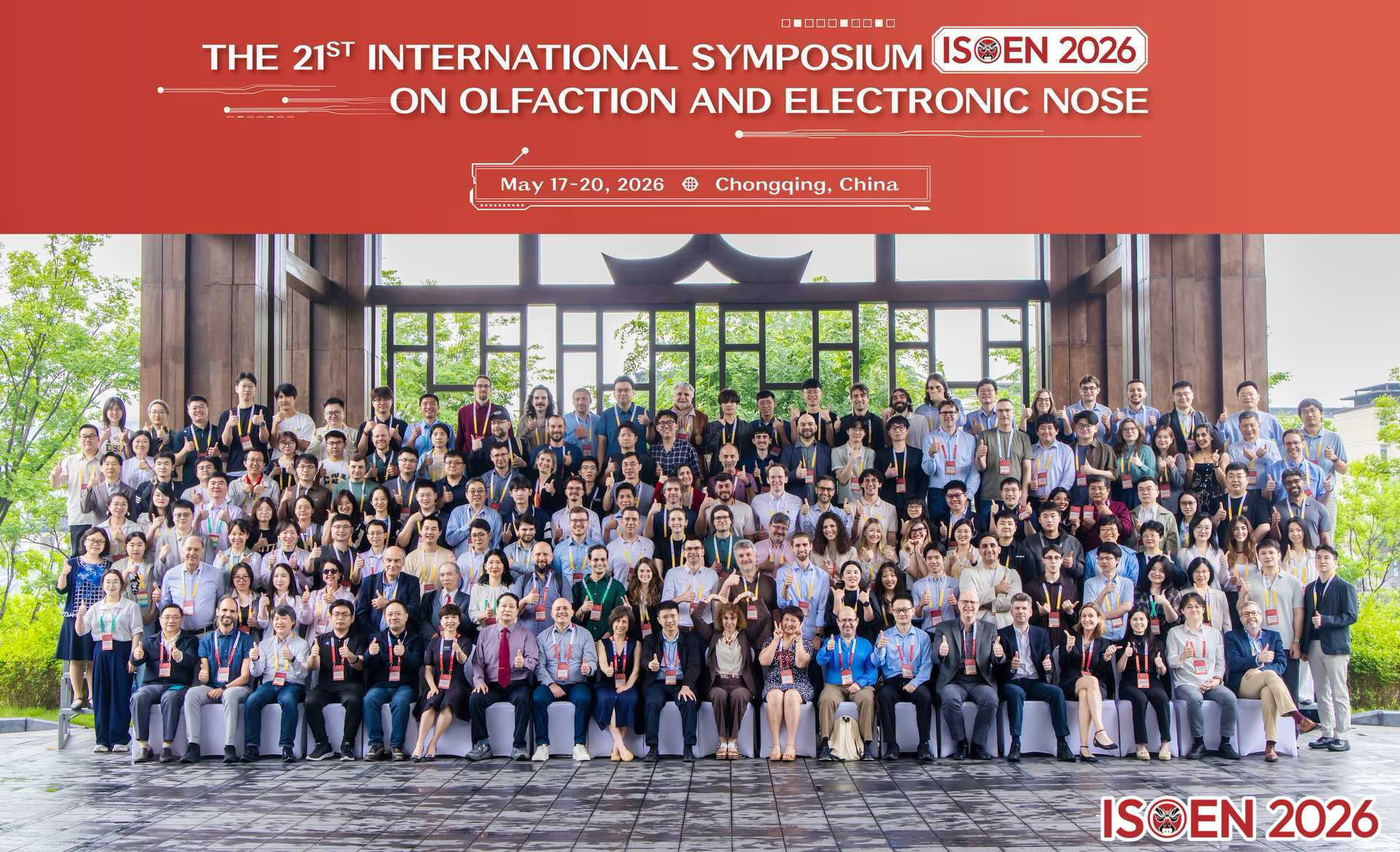
Andreas and Jordi participated in the International Symposium on Olfaction and Electronic Nose (ISOEN 2026), held in Chongqing, China. The conference brings together experts in electronic noses, chemical sensing technologies, machine learning, and environmental monitoring applications.
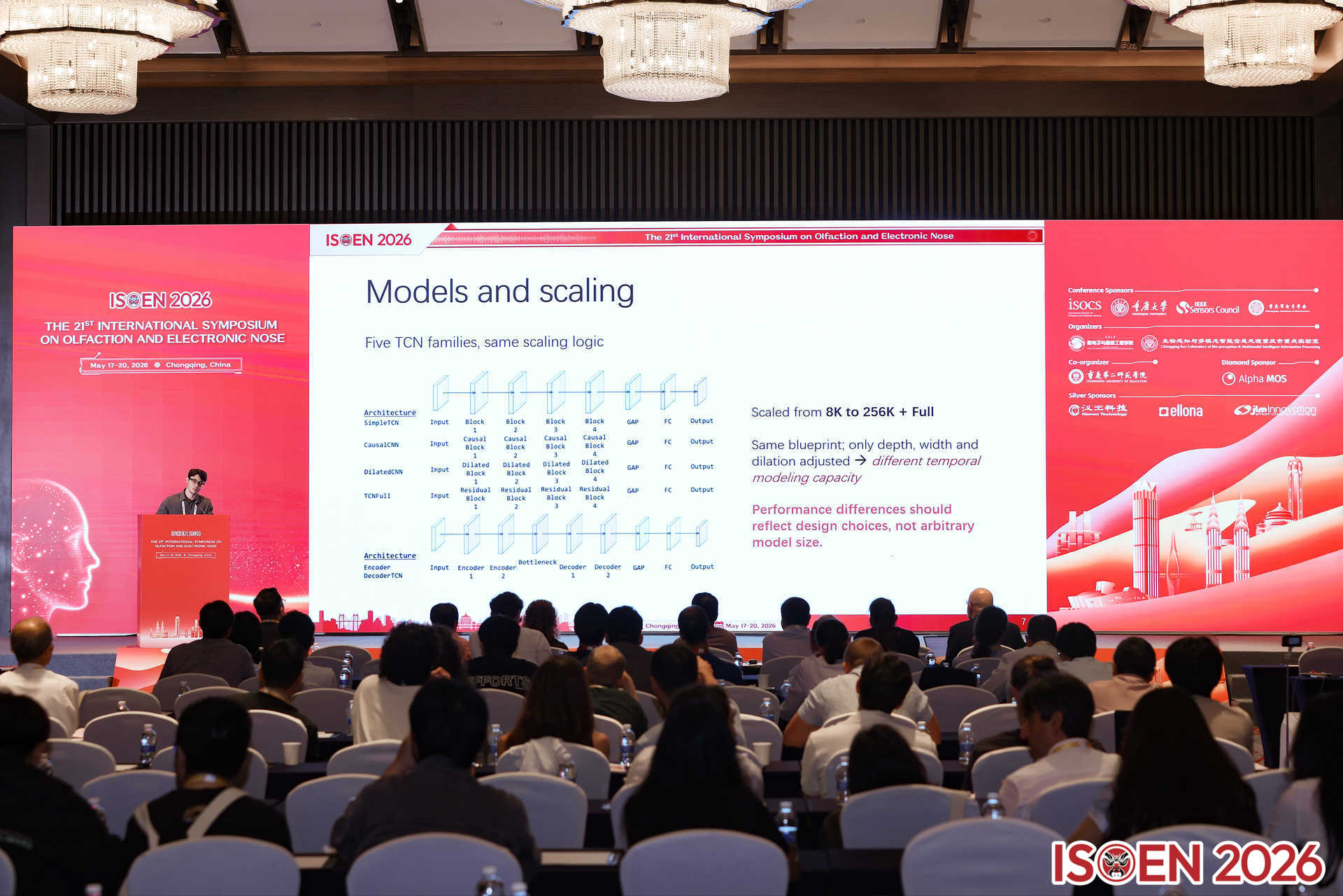
During the event, Andreas delivered the oral presentation “Temporal Convolutional Networks Scaling Under Seasonal Drift: A Benchmark for Edge Odour Classification”. The work, developed in collaboration with researchers from Politecnico di Milano, evaluates how different Temporal Convolutional Network (TCN) architectures behave under long-term seasonal drift conditions when deployed for odour classification tasks. The study evaluates TCN architectures under realistic conditions to identify trade-offs between complexity, robustness, and edge deployment feasibility.
In addition to the oral contribution, the collaboration between B2Slab and the Politecnico di Milano was also represented through the poster “Data Processing Approaches to Manage Humidity and Drift When Using an E-Nose for Monitoring Odours from Waste Treatment Plants”. This work focuses on signal processing methodologies designed to mitigate the effects of humidity variations and sensor drift, two major factors affecting the long-term performance of electronic nose systems deployed in real-world environmental applications.
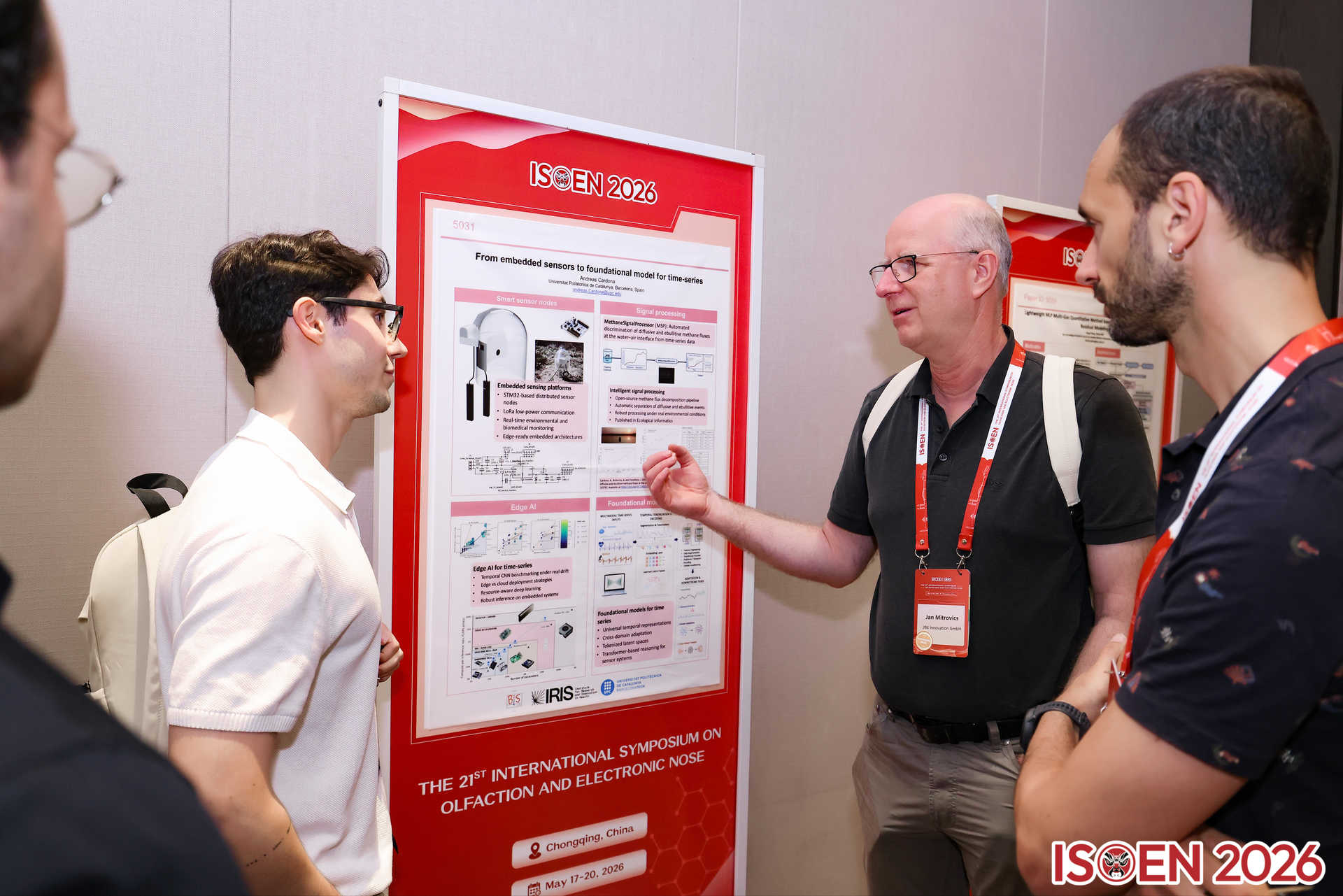
The conference also included participation in the Young Professional Investigator session, where a poster presenting the current PhD research line of Andreas Cardona was showcased. The research focuses on the intersection of sensing systems, artificial intelligence, edge computing, and time-series modelling, with the aim of developing robust and deployable AI solutions for real-world sensor applications. The presented research roadmap covers topics ranging from signal processing and sensor data analysis to machine learning deployment strategies, edge intelligence, and foundation models for sensor data. These activities align with ongoing efforts to improve the reliability, scalability, and practical adoption of AI-driven sensing technologies.
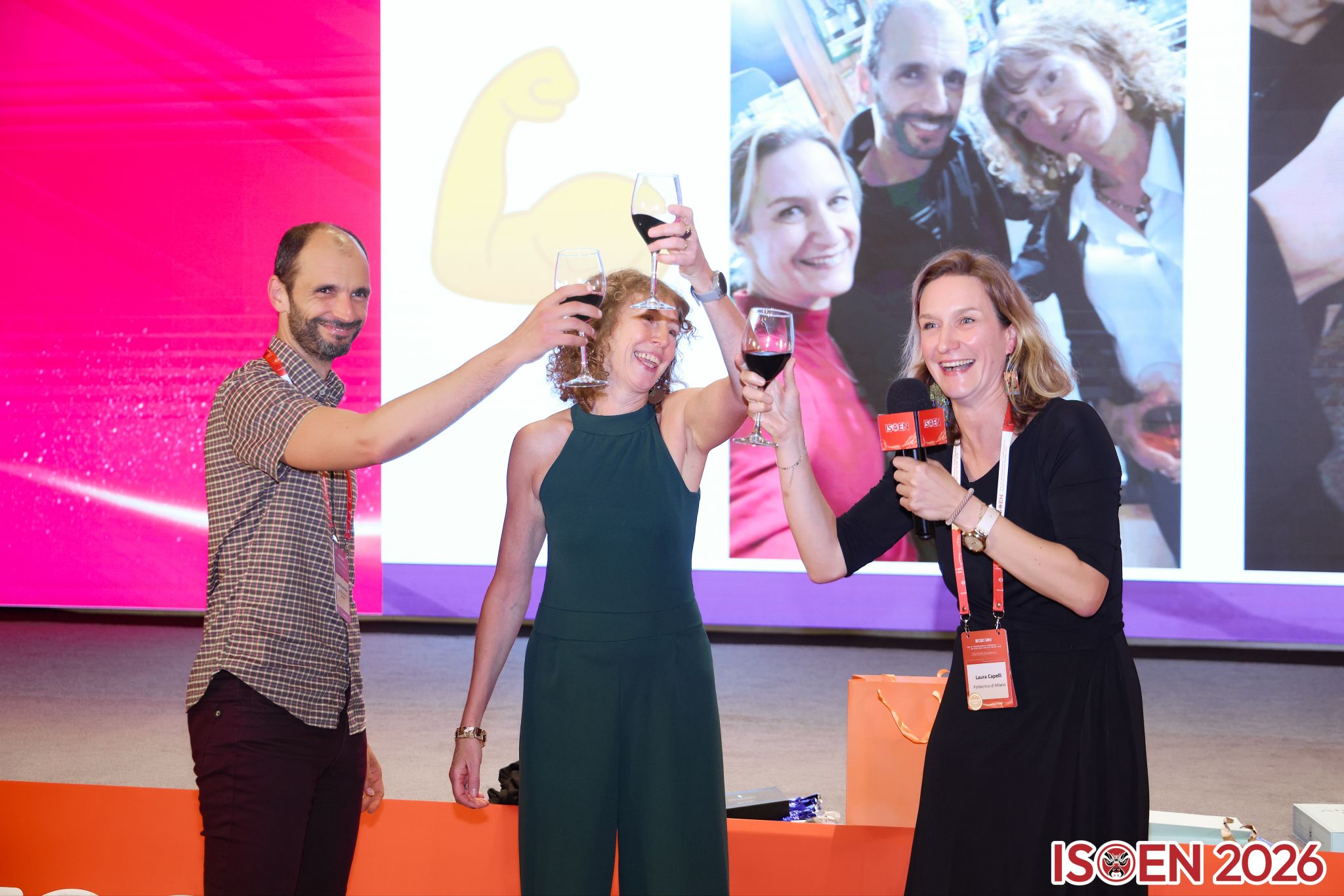
Also, during the event Jordi was appointed Vice-President of ISOCS. He is now looking forward to contributing to the community in the field of olfaction and chemical sensing with his new role.
Beyond the scientific contributions, ISOEN 2026 provided an excellent opportunity to exchange ideas on current challenges in electronic noses, machine learning for sensing systems, sensor drift compensation, and edge AI deployment. The event facilitated discussions with researchers from academia and industry, helping identify emerging research directions and opportunities for future collaboration.