Can a molecule in your blood predict diabetes years before it strikes?
A 7-year early warning
Type 2 diabetes (T2D) does not appear overnight. The metabolic changes that eventually produce a diagnosis accumulate silently over years — which means, in principle, that the right measurement in the right blood sample could flag a future diabetic long before symptoms arise.
This is the premise behind metabolomics-based biomarker discovery, and it is the approach our team took in a study recently published in Frontiers in Endocrinology. We asked: are there small molecules circulating in the blood of people who will later develop T2D that distinguish them from people who won’t?
How the study was done
We used an untargeted metabolomics approach — casting a wide net across thousands of blood metabolites — on plasma samples from 352 individuals in a discovery cohort. These samples were collected on average 7.4 years before the subjects either developed T2D (143 cases) or remained healthy (209 controls). This design — a nested case-control within a prospective cohort — is key: it means the metabolite signal precedes the diagnosis, not just reflects it.
From the discovery phase, six candidate metabolites emerged as significantly associated with incident T2D: guanine, ecgonine, adenine, pregnenolone sulfate, phenyl sulfate, and citrulline. We then validated the most promising ones using targeted metabolomics in a larger, independent cohort of 2,044 individuals.
What survived validation
Three metabolites held up in the independent cohort: guanine, pregnenolone sulfate, and citrulline.
- Guanine is a purine nucleobase involved in nucleotide metabolism. Its association with T2D risk connects to emerging evidence that purine metabolism is disrupted in the early stages of diabetes development.
- Pregnenolone sulfate is a neurosteroid precursor that may reflect alterations in steroid hormone metabolism, which is increasingly recognised as playing a role in metabolic disease.
- Citrulline is an amino acid linked to arginine and nitric oxide metabolism, with potential ties to vascular function and insulin signalling.
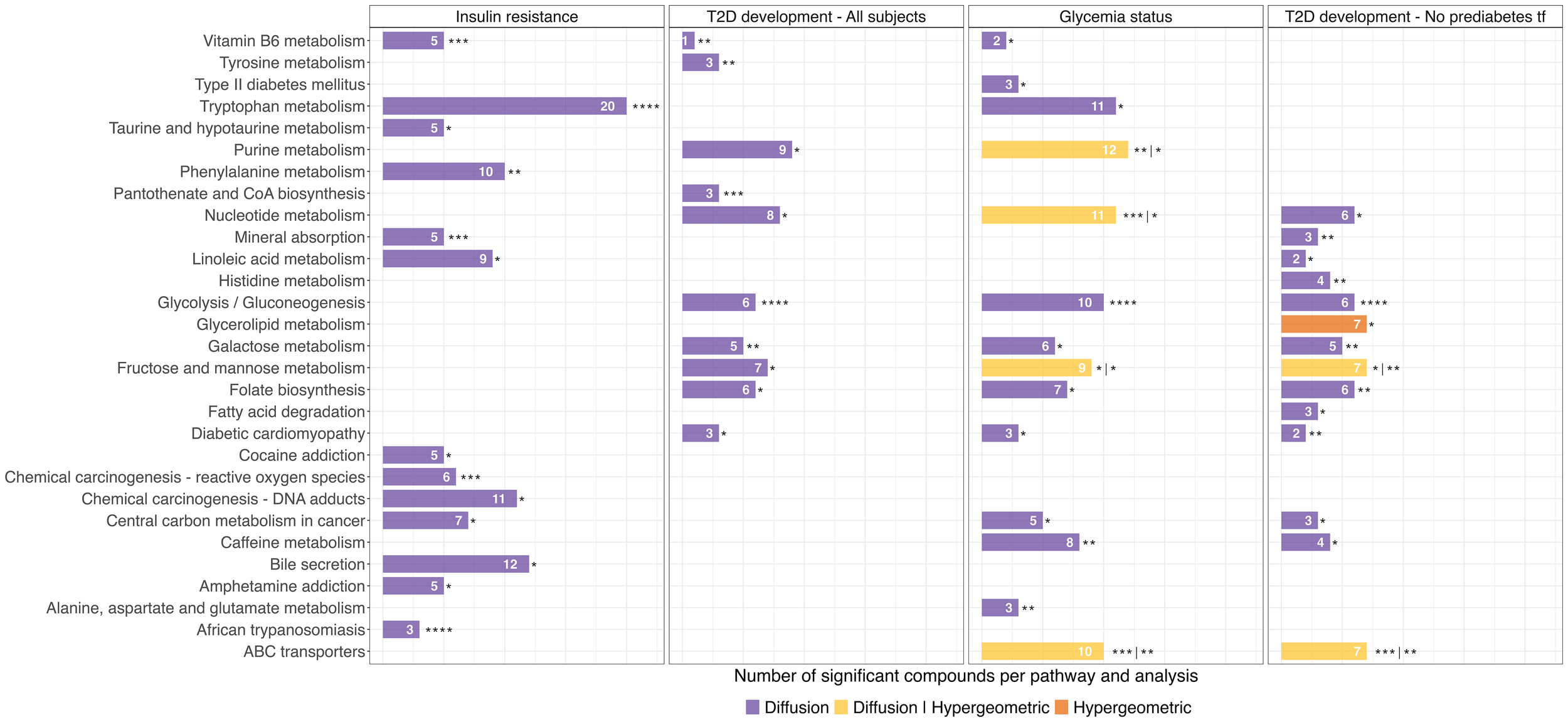
Beyond individual metabolites, the study also identified nucleotide metabolism and ABC transporter pathways as consistently altered in pre-diabetic individuals, pointing to biological processes worth investigating for early intervention.
What this means for prevention
The ability to detect T2D risk years before diagnosis is clinically meaningful. Current screening relies heavily on fasting glucose and HbA1c, which typically become abnormal only once significant beta-cell dysfunction has occurred. Metabolomics markers like those identified here could complement standard screening, helping identify individuals who would benefit most from preventive lifestyle interventions while there is still time to act.
The study represents another step in B2SLab’s ongoing work at the intersection of metabolomics and diabetes, building on a body of research that includes EHR-based trajectory prediction and lipidomics in diabetes complications.
The paper is available at: Barranco M, Granado M, Yanes Ó, et al. Guanine and pregnenolone sulfate are associated with incident type 2 diabetes in two independent populations. Frontiers in Endocrinology, 2025. https://doi.org/10.3389/fendo.2025.1706886