Congratulations Dr. Enrico Manzini
A well-deserved title
March 25, 2026 at 11:00, at the Faculty of Mathematics and Statistics (FME) of the Universitat Politècnica de Catalunya (UPC), Enrico Manzini successfully defended his doctoral thesis on deep learning methods for Electronic Health Records (EHRs). On behalf of the entire B2SLab team, I want to extend my warmest congratulations to Dr. Enrico Manzini for this outstanding achievement. It has been a privilege to accompany him through this journey.
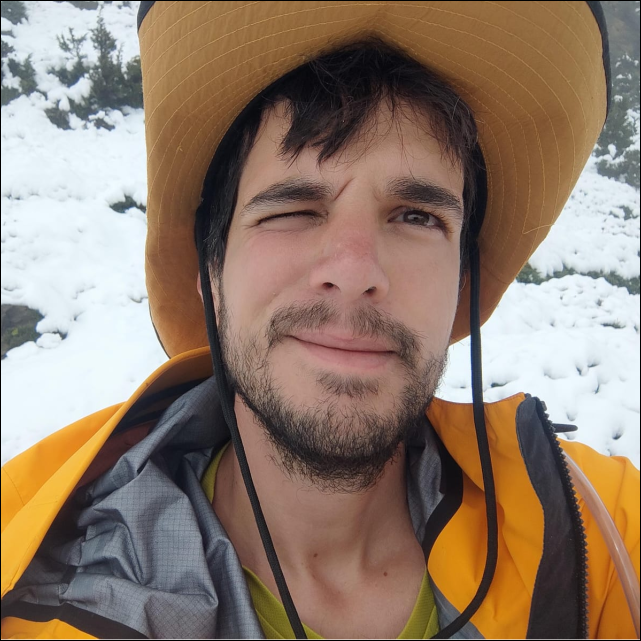
Enrico joined B2SLab after an impressive academic path, including a Bachelor’s degree in Information Engineering from the University of Padua (UNIPD), followed by a double Master’s degree in Biomedical Engineering (UNIPD, Padova, Italy) and in Automatic Control & Robotics (UPC, Barcelona, Spain) through the prestigious T.I.M.E. Double Degree program. His multidisciplinary background — combining engineering, control theory, and biomedical sciences — has been a good foundation for the research he has done with us.
On deep learning for chronic disease modeling
Enrico’s doctoral work focused on deep learning for Electronic Health Records, with a particular emphasis on modeling the progression of chronic diseases such as Type 2 Diabetes Mellitus (T2DM) and Chronic Obstructive Pulmonary Disease (COPD).
His research addressed a fundamental challenge in clinical AI: how to extract meaningful, actionable predictions from the messy, irregular, and heterogeneous data generated by routine clinical care.
Avoiding the use of text-based or LLM models, Enrico’s approach embraced the full longitudinal richness of EHRs — sequences of diagnoses, prescriptions, lab results, and clinical events spanning years — and applied modern deep learning architectures (transformers, attention mechanisms, recurrent networks) to model disease trajectories and forecast clinically relevant outcomes. This approach has pioneered b2slab first actions into building Foundational Models in Health, aiming to a full Diabetes Foundational Models in which other team members are currently working, direct consequence of Enrico’s work.
The thesis built upon a series of published contributions with scientific depth and practical relevance:
Longitudinal deep learning clustering of Type 2 Diabetes Mellitus trajectories using routinely collected health records Journal of Biomedical Informatics, 135, 104218, 2022. One of the foundational papers of the thesis, introducing unsupervised deep learning to identify patient subgroups in T2DM from real-world health records.
Mapping layperson medical terminology into the Human Phenotype Ontology using neural machine translation models Expert Systems with Applications, 204, 117446, 2022. A methodological contribution showing how NLP and neural machine translation can bridge the gap between patient language and formal clinical ontologies.
A deep attention-based encoder for the prediction of Type 2 Diabetes longitudinal outcomes from routinely collected health care data Expert Systems with Applications, 274, 126876, 2025. The DARE model, a transformer-based architecture trained on data from over 200,000 individuals, capable of predicting comorbidity onset, treatment changes, and glycemic control targets with high accuracy.
A BERT base model for the analysis of Electronic Health Records from diabetic patients 2024 IEEE Engineering in Medicine and Biology Conference (EMBC), 2024. Demonstrating the power of large language model pretraining on clinical sequences to build general-purpose representations of patient health.
Deep Survival Analysis of Longitudinal EHR Data for Joint Prediction of Hospitalization and Death in COPD Patients arXiv preprint arXiv:2511.05960, 2025. Extending the framework to COPD — a complex, multi-morbid condition — and tackling survival analysis with competing risks from longitudinal records.
Smile-to-BERT: A BERT architecture trained for physicochemical properties prediction and SMILES embeddings generation (with M. Barranco-Altirriba, V. Würf, J.K. Pauling, A. Perera-Lluna) — bioRxiv, 2024. A contribution to molecular property prediction, showing the breadth of Enrico’s interest in applying language model ideas beyond the clinical domain.
Thank you, Enrico
Watching a PhD student grow from their first steps in the lab to the moment they stand before a committee and defend years of original research is one of the most rewarding experiences I can have.
Enrico approached every challenge with rigor, intellectual honesty, and … good humor. He has contributed not only excellent science but also a great deal of energy and warmth to the lab.
The field of clinical AI is better for the work he has done. We have no doubt that wherever he goes next, he will continue to make an impact.
Congratulations, Dr. Manzini. The Legends were right — it does end someday.
/Àlex